

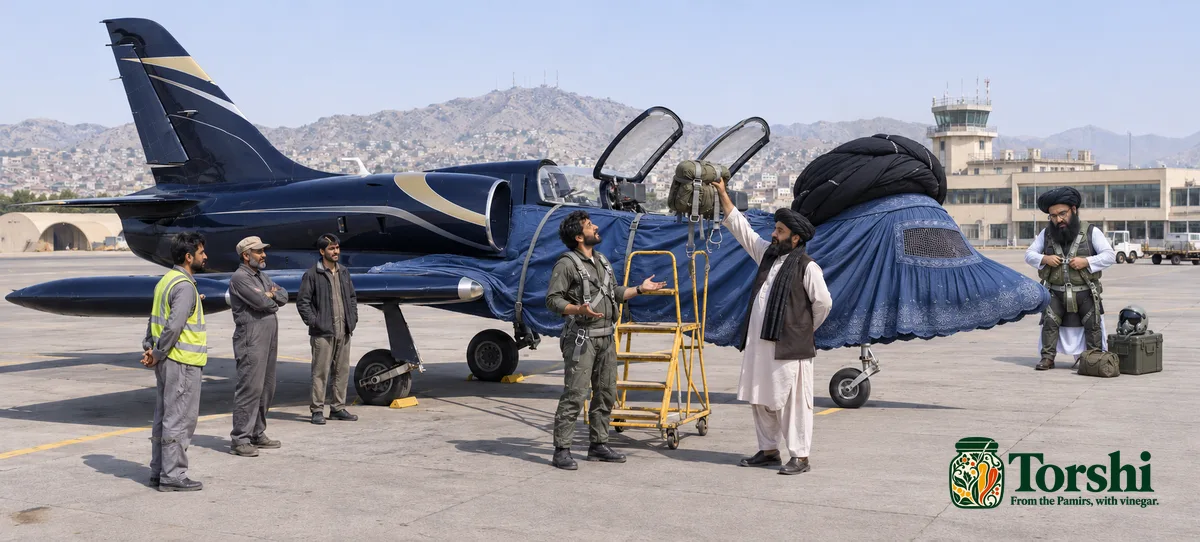
KABUL—The Taliban unveiled a restored Soviet-era L-39, proving Afghanistan could revive a jet while retiring the idea of educating its pilots.
The aircraft had no missiles. Hibatullah approved it as a suicide bomber with wings. “Why arm the plane when the pilot comes preloaded?”
Maulavi Kabir volunteered for the maiden flight, assuring engineers his payload required no explosives. Hibatullah approved Operation Fat Mullah. Soviet engineers were summoned to reinforce the runway after discovering Afghanistan's heaviest weapon was already serving in the cabinet.
India's reported assistance alarmed Pakistan, whose generals asked whether Delhi had installed a reverse gear pointing toward Rawalpindi.
The Taliban unveiled highways and bridges beneath the flypast. Baradar said the roads would double as runways, while universities were replaced by institutions better equipped to explain every crash as divine destiny.
Yaqoob suggested training women to maintain the jet. Officials objected: “A woman who can fix an engine might discover she can run the country. Better to lose the plane.”
A recruit asked whether the air force had parachutes. Hibatullah said parachutes encouraged desertion.
Pakistan offered to supply the suicide pilots, provided India supplied the aircraft and Washington paid for the funerals. Rawalpindi called it regional cooperation.
The inaugural mission was postponed when the pilot asked where he should land. Badri 313 unit arrested him for planning to return.